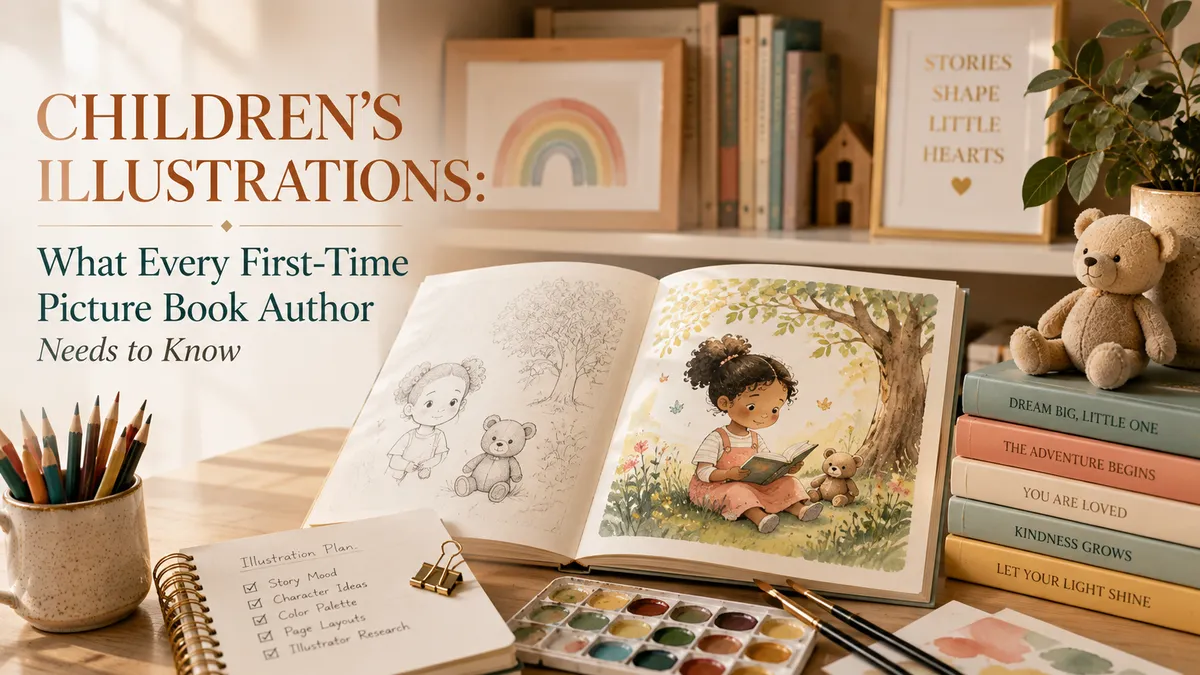
Children's Book Illustration: A Guide for Authors
If you’ve written a children’s book, you already know something many first-time authors in other genres don’t have to grapple with quite as directly: your book isn’t finished when the words are. A picture book is really two art forms working together — text and illustration — and the illustrations often carry as much of the story’s emotional weight as the words themselves, sometimes more.
This can feel daunting if you’re not an illustrator yourself, and most children’s book authors aren’t. But understanding how the illustration process actually works — and what your role as the author is within it — makes the whole thing far less mysterious and far more collaborative than it might seem from the outside.
Words and Pictures Are a Partnership, Not a Translation
One of the most common misconceptions first-time picture book authors have is that illustration exists to depict exactly what the text describes — a kind of visual transcription. In reality, the best picture books use illustration and text to tell the story together, each carrying part of the load so neither has to do everything alone.
Maurice Sendak, the celebrated author and illustrator of Where the Wild Things Are, described the illustrator’s role this way:
“This is what the illustrator’s job is all about, to interpret the text as a musical conductor interprets a score.”
— Maurice Sendak
A conductor doesn’t simply repeat the notes on the page louder — they bring interpretation, emotion, and pacing to the piece. In the same way, a skilled illustrator brings their own artistic interpretation to your words, often revealing details, humor, or emotional depth that the text alone doesn’t state outright. A page of text that simply says “the little girl walked into the forest” leaves enormous room for an illustrator to convey whether that forest feels magical, frightening, or peaceful — decisions that meaningfully shape how a child experiences the story.
What to Expect from the Illustration Process
If you’re working with a professional publisher, a typical children’s book illustration process generally includes:
- Manuscript breakdown. Your text is divided into spreads (the two-page layouts a reader sees at once), identifying which lines of text pair with which illustrated scenes.
- Character and style development. Before any final art begins, an illustrator typically develops character sketches and a visual style test, giving you a chance to weigh in before the full book is illustrated in that direction.
- Rough layout (“thumbnail” or “storyboard”) stage. Simple, loose sketches show the overall flow and composition of every spread, so structural issues can be caught early, before detailed art is invested in a layout that doesn’t work.
- Full illustration. Once the rough layouts are approved, the illustrator produces finished, full-color artwork for each spread.
- Text and image integration. Your final text is placed onto the illustrated spreads, with careful attention to legibility, spacing, and how the words interact visually with the artwork underneath or around them.
Each of these stages typically includes a review point for the author, which is exactly the right time to give feedback — waiting until finished art is complete to raise concerns is far more costly than catching them at the sketch stage.
Choosing the Right Illustration Style
Children’s book illustration spans an enormous range of styles — whimsical watercolor, bold flat digital color, detailed pencil work, collage, and many others. The right style for your book depends on:
- Your book’s tone. A gentle bedtime story calls for a different visual approach than an energetic, silly adventure.
- Your target age range. Board books for the youngest readers often use simpler shapes and higher contrast; picture books for slightly older children can support more visual detail and complexity.
- Comparable titles in your category. Looking at successful books similar to yours in tone and audience can help you and your illustrator settle on a style direction quickly.
- Your book’s specific themes. A children’s book with a faith-based message may lean toward warm, inviting imagery that reflects hope and comfort rather than anything overly literal or heavy-handed.
Finding the Right Illustrator
Author-illustrator fit matters enormously, and it’s worth taking real time to find the right match rather than choosing the first available option. Consider:
- Portfolio review. Look specifically for work in a style and tone similar to what you envision for your book, not just impressive art in a completely different register.
- Communication style. You’ll be collaborating closely through multiple rounds of feedback, so responsiveness and clarity matter as much as talent.
- Rights and contract clarity. Understand upfront what rights you’re purchasing (often called “work for hire” in children’s publishing) versus what the illustrator retains, and get this in writing before work begins.
- Realistic timeline expectations. Full picture book illustration — 24 or 32 finished spreads, typically — takes meaningfully longer than most first-time authors expect. Building in a generous timeline avoids unnecessary pressure on both author and illustrator.
Publishers who handle illustration in-house, like The 1 and Only Publishing, can streamline this process considerably, since the illustrator is already familiar with production requirements, trim size considerations (see our guide on trim sizes for how picture book dimensions typically differ from standard novels), and print file specifications.
Preparing Your Manuscript for Illustration
Before illustration begins, it helps to review your manuscript with an illustrator’s eye:
- Trust the illustrations to carry some of the story. If every emotion and detail is spelled out in the text, there’s little room left for the illustrator to add anything meaningful. Some of the best picture book writing leaves deliberate space for images to do their part.
- Consider pacing across spreads. Picture books typically move in two-page increments; thinking about where natural page turns should fall can help both you and your illustrator plan a satisfying rhythm.
- Flag anything requiring specific accuracy. If your story involves a particular setting, cultural detail, or historical element, note this clearly so your illustrator can research it properly rather than guessing.
Common Illustration Mistakes First-Time Authors Should Avoid
- Micromanaging every detail. It’s natural to have a vision for your book, but leaving no creative room for your illustrator often results in flatter, less compelling artwork than a genuine collaboration would produce. Share your vision clearly, then trust their expertise to interpret it.
- Choosing a style based on trends rather than fit. A currently popular illustration style won’t serve your book well if it doesn’t match its tone. A quiet, reflective bedtime story illustrated in a loud, frenetic style will feel mismatched no matter how skilled the artist is.
- Skipping the character consistency check. Characters need to look recognizably the same from spread to spread — same proportions, same color palette, same distinguishing features. This is one of the most common issues caught (and fixed) at the sketch stage.
- Underestimating cultural or historical research needs. If your story includes specific settings, clothing, or cultural details, flag this early so your illustrator can research accurately rather than relying on generic assumptions.
- Waiting too long to give feedback. The earlier you catch a concern — ideally at the rough sketch stage — the easier and less costly it is to address.
A Reminder for Faith-Driven Children’s Authors
Children’s books carry real weight — often, they’re a child’s first encounter with big ideas about kindness, courage, faith, or family. Scripture speaks warmly to the value of reaching children with care and welcome:
“But Jesus said, ‘Let the little children come to me, and do not hinder them, for the kingdom of heaven belongs to such as these.’”
— Matthew 19:14
That warmth and welcome is worth carrying into every decision about your book’s illustrations — choosing imagery that invites a child in rather than talking down to them, and trusting that gentle, honest storytelling (visual and written together) can carry real meaning even in a simple picture book.
Bringing It All Together
A children’s book is a genuinely collaborative art form, and the partnership between your words and your illustrator’s artwork is where the real magic happens. Approaching the process with patience, clear communication, and trust in your illustrator’s craft will help your story become the book you always imagined — not just written, but fully realized on the page. If you’d like a partner for that journey, explore Little Olive Books, our children’s book imprint.
Frequently Asked Questions
Do I need to find my own illustrator, or can a publisher provide one?
Both paths are common. Some authors come to a publisher with an illustrator already in mind or under contract; others rely on their publisher to source and manage an illustrator as part of the full production process. Either way, clarify expectations and rights upfront.
How long does children's book illustration typically take?
Timelines vary significantly based on the illustrator's schedule, the number of spreads, and the complexity of the art style, so it's important to get a specific timeline estimate directly from your illustrator or publisher rather than assuming a standard length.
What's the difference between a "spread" and a "page" in a picture book?
A spread refers to the two facing pages a reader sees at once when the book is open, which is the primary unit of layout planning in most picture books, rather than individual single pages.
Can I request changes after illustrations are finished?
Most illustration processes build in review points at the sketch and rough layout stages specifically so major changes can happen before finished art is produced. Requesting substantial changes after final art is complete is usually possible but often comes with additional cost and time.
Do illustrators retain any rights to the artwork they create for my book?
This depends entirely on your contract. Many children's book illustration agreements are structured as "work for hire," meaning the author or publisher owns the final artwork outright, but terms vary, so review any illustration agreement carefully — and consult a qualified attorney if you have questions about the contract itself, since this is legal guidance beyond general publishing education.
Write · Publish · Impact · Legacy
Ready to Bring Your Story to Life?
Book a free consultation and let’s talk about illustrating your children’s book with care.
Schedule Your Free Consultation →Free consultation · No obligation · A clear next step for your book